

Every casino game ever created carries an inherent mathematical edge for the casino https://hahaspin.eu/. That benefit is neither a trick, a scam, or an indication that the game is rigged. It is just the price of participating. Knowing how the house advantage works transforms gambling from a blind hope into a strategic form of entertainment. Players who grasp this concept can make smarter choices about which games to play, how to manage their funds, and when to walk away. The house edge is expressed as a percent that reflects the mean gross profit the house expects to retain from each wager over the long run. A game with a 2% house advantage signifies that, theoretically, for each 100 units bet, the establishment holds 2 and gives back 98 in winnings. This overview unpacks all layers of that seemingly simple number, demonstrating precisely how it is calculated, how it differs across game types, and what a participant can actually do about it.
What the House Edge Really Signifies
The house edge constitutes the numerical reflection of the casino’s structural advantage in any game of chance. It is not a fee deducted from every bet, nor does it act as a guarantee that a player will lose exactly that percentage in a single session. Instead, it indicates the long-term expected outcome across millions of hands, spins, or rolls. If a slot machine has a 4 percent house edge, the theoretical return-to-player rate is 96 percent. Over a few dozen spins, a player might double their money or lose everything. Over a year of continuous play across thousands of customers, the machine will grind remarkably close to that 4 percent margin. This mathematical certainty is what allows casinos to operate as businesses rather than as charitable operations.
The crucial distinction lies between short-term variance and long-term expectation. Variance is the wild swing of luck that produces winning streaks and losing streaks in any given session. The house edge is the quiet, relentless gravity that pulls results back toward the casino’s favor over time. A roulette player betting on red faces a house edge of 2.70 percent on a single-zero wheel, but in ten spins, they could easily win seven times. After ten thousand spins, however, the actual return will hover very close to the mathematical prediction. Understanding this separation between immediate experience and underlying probability is the foundation of informed play. It explains why chasing losses is dangerous and why treating gambling as a paid entertainment expense makes far more sense than viewing it as an investment strategy.
The house edge for every game is calculated by comparing the true odds of an event occurring against the payout odds the casino offers. True odds reflect the actual probability. If a bet has a 1 in 37 chance of winning, the true odds are 36 to 1. If the casino pays only 35 to 1, the shortfall creates the house edge. That single unit of difference, multiplied across thousands of wagers, builds the entire gaming industry. The house edge is therefore not a mysterious force but a simple arithmetic gap between what should be paid and what is actually paid. Smart players learn to identify which games have the narrowest gaps and which bets within those games offer the most favorable conditions.
The way the House Edge Works Out Across Different Game Types
Calculating the house edge begins with charting every possible outcome of a wager and giving each its exact probability. For a simple coin-flip game, the probability of heads is 50 percent. If a casino gave even-money payouts on that bet, the house edge would be zero. But if the casino paid 0.90 for a 1-unit wager on a correct call, the edge would be 5 percent. Real casino games feature far more outcomes. In European roulette, a straight-up bet on a single number has a 1 in 37 probability because of the single zero. The true odds are 36 to 1, but the payout is 35 to 1. The expected value calculation multiplies the probability of winning by the payout, includes the probability of losing multiplied by the loss, and presents the result as a percentage of the wager. The formula generates a house edge of 2.70 percent for that bet, and for nearly every other bet on the layout.
Slot machines function on a essentially alternative calculation model. Instead of predetermined probabilities calculated from real wheels or cards, slots use random number generators programmed with virtual reel mappings. authoritative source A individual spin can trigger hundreds of thousands of potential combinations, each given a particular probability. The game’s overall return-to-player percentage is established by adding the products of every winning combination’s probability and its payout value. The house edge is merely 100 percent minus that RTP figure. Unlike table games where the player can determine the edge from apparent rules, slot RTP is set by the game developer and verified by independent testing laboratories. Players commonly find this information in the game’s help files or on the casino’s website, though precise figures may change by jurisdiction.
Card games like blackjack introduce a further layer of complexity because player decisions directly impact the house edge. The basic house edge in blackjack relies on the player follows perfect basic strategy for the specific rule set in use. Deviating from that strategy boosts the effective house edge, sometimes dramatically. A player who consistently stands on 12 against a dealer’s 10 provides the house a much larger advantage than the typical 0.5 percent achievable with optimal play. Video poker operates similarly, with the pay table determining the theoretical return and player skill dictating how close they come to achieving it. This interactive dimension means that two players sitting at identical machines or tables can face radically different effective house edges based solely on their decision-making quality.
The way Bonuses and Promotions Work Together with the House Edge
Casino bonuses modify the effective house edge by adding extra funds or spins to a player’s account, but they include conditions that must be considered in any mathematical assessment. A 100 percent deposit match bonus essentially doubles the starting bankroll, which appears as if it should halve the house edge. However, wagering requirements attach a cost to that bonus. If a player must wager the bonus amount 35 times before withdrawing, the expected loss from playing through those requirements must be compared with the bonus value. A bonus on a game with a 3 percent house edge played through 35 times results in an expected loss of 105 percent of the bonus amount, meaning the bonus actually carries a negative expected value despite looking generous.
The key to evaluating any bonus lies in recognizing the playthrough multiplier and the eligible games’ house edge. A bonus with a 25x wagering requirement played on a blackjack game with a 0.5 percent house edge produces an expected loss of only 12.5 percent of the bonus amount, offering substantial positive expected value. The same bonus played on slots with a 4 percent edge results in a 100 percent expected loss, wiping out the bonus entirely. Many casinos, including Hahaspin Casino, apply different game weightings toward wagering requirements, with table games often contributing a smaller percentage than slots. Reviewing the full terms and conditions before claiming any promotion is not merely advisable; it is the only way to determine whether the offer genuinely enhances the player’s position.
Free spins offers present a simpler calculation. Since the spins themselves cost nothing, any winnings they generate represent pure positive expected value, based on whatever wagering requirements attach to those winnings. A batch of 50 free spins on a 96 percent RTP slot has an expected raw value of 50 times the spin value times 0.96. If winnings must be wagered 30 times on slots with a 4 percent house edge, the expected cost of meeting those requirements must be removed. The net result can still be positive, but the player should figure out it rather than presume free means cost-free. Promotions are marketing tools meant to attract deposits, but mathematically informed players can identify which offers genuinely turn the odds in their favor.
Playing on Mobile and the Uniformity of the House Edge
A common misconception suggests that mobile casino games carry a distinct house edge than their desktop versions. In a properly regulated environment, this is false. The random number generator and game logic reside on the casino’s server or within a certified game file that is identical irrespective of the device used to access it. A slot with a 96 percent RTP on a desktop browser has the same 96 percent RTP when played on a smartphone or tablet. The only variable that changes is the user interface, which is tailored for touch controls and smaller screens. Game providers build their titles in HTML5, ensuring that the underlying mathematics remain unchanged across all platforms.
What can differ on mobile is the player’s behavior and session length, which in turn affects the encountered variance. Mobile sessions tend to be shorter and more frequent, which means players may face more extreme short-term results compared to their total wagering volume. A player who spins 50 times on a mobile device during a commute encounters far more volatility versus their expected loss than one who plays 500 spins in a desktop evening session. The house edge remains unchanged, but the perception of fairness can vary. Understanding that the mathematics are device-agnostic helps players steer clear of the false belief that switching platforms will affect their luck. Hahaspin Casino’s mobile experience provides the same certified game library with full features, enabling players to believe that the odds are consistent wherever they choose to play.
Banking Options, Processing Times, and the Real Cost of Play
The game margin is not the single factor a player deals with. Banking channels come with their own costs, settlement times, and FX costs that can eat into a bankroll before a single bet is set. E-wallets like Skrill and Neteller typically offer the most rapid withdrawal times, often settling within 24 hours, but might impose small transaction fees. Bank transfers are more time-consuming, sometimes needing three to five business days, but normally have no supplementary casino-side fees. Credit and debit cards sit in the center, presenting broad acceptance and balanced processing speeds. Cryptocurrency options, where available, can provide near-instant transfers with low network fees, though exchange rate volatility introduces a different kind of risk.
Players should include these additional costs into their total assessment of the gambling experience. A casino that features a 1 percent lower house edge on its blackjack tables but imposes a 2 percent withdrawal fee and requires a week to complete payouts could be prone to higher costs in real terms than a competitor with somewhat worse game odds but complimentary, fast cashouts. The total cost of play covers the house edge, bonus terms, payment friction, and the value of the player’s time spent waiting for funds. Hahaspin Casino provides a range of widely used payment methods, and players should review the banking page for the most up-to-date information on processing times and any applicable limits or fees before depositing funds.
Licensing and oversight, Security, and Game Fairness Verification
The casino advantage percentages mentioned throughout this article presume that the games are unbiased and that the advertised probabilities match the actual outcomes. That presumption only remains valid when a casino functions under a proper gaming license and subjects its games to independent testing. Reputable gaming authorities, such as the Malta Gaming Authority or the Curacao eGaming authority, require licensees to demonstrate that their RNGs produce truly random and impartial outcomes. These governing bodies require routine testing by approved testing labs like eCOGRA, iTech Labs, or GLI, which verify that the actual returns are within numerically reasonable boundaries of the theoretical RTP.

Players can check a casino’s license validity by scrolling to the base of the site, where the license number and regulatory agency are usually shown. Tapping the licence badge should lead to a active confirmation screen on the authority’s webpage. If the seal is only an image without a clickable hyperlink, that is a serious cause for concern. Security is a distinct but equally essential consideration. SSL security, shown by the padlock symbol in the web browser address bar, ensures that private and monetary data sent between the customer and the casino is unable to be accessed. 2FA, where provided, provides an additional layer of user safeguarding. These safety measures do not affect the house edge, but they determine whether the customer will ultimately have a chance to receive the prizes that the edge permits.
Casino Advantage in Table Games
Casino table games generally offer the most advantageous house edge figures for players ready to learn basic strategy. Blackjack, when approached with optimal rules and optimal basic strategy, can feature a house edge as minimal as 0.5 percent. That statistic is based on standard rules such as the dealer staying on soft 17, doubling after splitting available, and a 3-to-2 return on natural blackjacks. If the casino pays only 6-to-5 on blackjacks, the house edge increases by approximately 1.4 percent, converting one of the best bets in the casino into a significantly worse deal. Participants should always check the felt or ask the dealer about blackjack payout percentages before sitting down. Rule variations on splitting pairs, doubling down, and surrender options also change the edge, making it important to understand the specific table conditions.
Baccarat showcases one of the easiest house edge scenarios in the casino. The banker bet carries a house edge of approximately 1.06 percent, while the player bet sits at 1.24 percent. The tie bet, despite its enticing 8-to-1 or 9-to-1 payout, bears a ruinous house edge above 14 percent and should be avoided entirely by anyone who worries about preserving their bankroll. The commission charged on winning banker bets, typically 5 percent, is what generates the edge on that wager. Without it, the banker bet would actually have a small advantage over the house. Baccarat’s straightforward structure and low edge on the main bets have rendered it a favorite among high-stakes players who comprehend the mathematics.
Craps offers a broad spectrum of house edge values, spanning from the excellent to the catastrophic. The pass line and come bets, when paired with full odds, can reduce the effective house edge to well under 1 percent. The odds bet itself has a zero house edge, rendering it the only truly fair wager in the casino. However, proposition bets in the center of the table can carry house edges exceeding 10 or even 16 percent. The “any seven” bet, for instance, returns 4 to 1 but has true odds of 5 to 1, generating a house edge of 16.67 percent. The lesson is clear: sticking to the basic line bets and taking maximum odds is the mathematically sound strategy to craps.
Roulette Game Variants and Their Edge Differences
Roulette provides the clearest demonstration of how a individual rule change can significantly alter the house edge. European roulette, with its single zero, carries a consistent house edge of 2.70 percent on all bets except one. The exception is the “en prison” or “la partage” rule found in some French roulette variants, which cuts the house edge on even-money bets to 1.35 percent by returning half the wager when the ball lands on zero. American roulette, by adding a double zero pocket, practically doubles the house edge to 5.26 percent across most bets. The five-number bet covering 0, 00, 1, 2, and 3 has an even greater edge of 7.89 percent, turning it one of the worst bets on any table game floor.
The practical implication for players is straightforward: always look for single-zero wheels when they are available. The disparity between a 2.70 percent and 5.26 percent house edge may appear small in percentage terms, but over time it means the American wheel consumes nearly twice as much of a player’s bankroll per hour of play. Many online platforms, including Hahaspin Casino, feature both European and American variants, and the game lobby commonly reveals the wheel type clearly. Selecting the European version is one of the most straightforward and most impactful decisions a roulette player can make. The mathematics are unambiguous, and no degree of betting system or pattern recognition can surmount the structural disadvantage of the extra zero pocket.
Theoretical Hold in Slot Machines
Slot machines work on a essentially different concept than table games when it concerns the house edge. Instead of a single fixed figure that applies consistently to all bets, each slot title has its own programmed return-to-player rate. These rates generally range from about 92 percent to 98 percent, indicating the house edge spans from 8 percent down to 2 percent. The exact RTP for a given game is set by the game studio during development and is embedded in the software. Regulatory bodies in reputable jurisdictions demand that these figures be verified by independent testing agencies, guaranteeing that the actual performance matches the advertised rate over millions of spins.
Progressive slot machines present an additional wrinkle to the house edge calculation. A part of every wager contributes to the progressive prize pool, which means the base game RTP is lower than that of a comparable non-progressive slot. The general theoretical return encompasses the expected value of the jackpot contribution, but that value is solely realized by the one player who ultimately hits the top prize. For everyone else, the effective house edge during their session is greater because they are subsidizing the jackpot without getting its benefit. Players pursuing progressives should understand that they are swapping a higher base-game house edge for a small chance at a transformative sum. The trade-off is neither good nor bad in absolute terms, but it must be made with clear eyes.
Volatility and Its Relationship to the House Edge
Dispersion, also termed variance, describes how a slot machine allocates its payouts over time and is different from the house edge. Two slots can both have a 96 percent RTP, meaning a 4 percent house edge, yet play completely otherwise. A low-volatility game will generate frequent small wins that maintain the bankroll relatively stable, while a high-volatility game will provide long dry spells punctuated by occasional large payouts. The house edge remains unchanged in both cases, but the player experience and the bankroll needed to withstand the variance differ significantly. Picking the right volatility level for one’s budget and temperament is as important as reviewing the RTP percentage.
Players with smaller bankrolls who desire extended play sessions should gravitate toward low and medium-volatility slots. The frequent smaller wins, even if they do not fully compensate for the house edge, slow the rate of bankroll depletion and provide more entertainment time per unit wagered. additional details High-volatility games need a larger cushion to endure the inevitable losing streaks and still be in the game when the big win arrives. Grasping this contrast avoids the common frustration of adding a modest amount, picking a high-volatility game, and observing the balance evaporate in minutes. The house edge is a long-term average, but volatility governs the shape of the journey toward that average.
Practical Strategies for Lowering the House Edge
Cutting the effective house edge is not about defeating the casino. It is about choosing informed choices that reduce the rate of expected loss and extend playing time for a given bankroll. The single most impactful decision a player can make is game selection. Opting for blackjack with favorable rules and learning basic strategy can lower the house edge to half a percent, while playing American roulette or high-edge side bets amplifies the expected loss rate by a factor of ten or more. The gap between a 0.5 percent and 5 percent house edge signifies that a player wagering 100 units per hour expects to lose 0.5 units versus 5 units per hour. Over a weekend of play, that gap builds into hundreds of units.
Fund administration represents the second pillar of edge-aware play. Establishing strict loss limits and session time limits prevents the house edge from having unlimited opportunities to work. The longer a player gambles, the more certain it becomes that their actual results will converge toward the negative expectation. Stepping away after a predetermined number of hands or spins, regardless of whether the session is winning or losing, caps the total exposure to the edge. A disciplined player who allocates 200 units for an evening and stops when that budget is exhausted, or when a target win is reached, imposes a ceiling on the house’s mathematical advantage that no amount of luck can breach from the casino’s side.
The third strategy involves leveraging the tools that reputable casinos provide. Deposit limits, reality checks, and self-exclusion options are not merely responsible gambling features; they are tactical instruments for controlling exposure to the house edge. Configuring a daily deposit limit prevents the emotional decision to chase losses with funds that were not part of the entertainment budget. Reality-check notifications that pop up after a set period of play remind the player to assess whether they are still making rational decisions or simply feeding the edge out of inertia. These tools, combined with a clear understanding of the mathematics, convert the player from a passive participant into an active manager of their own risk.
- Select games with the minimum published house edge: blackjack (0.5%), baccarat banker (1.06%), European roulette (2.70%)
- Skip side bets and proposition wagers that feature double-digit house edges
- Study and apply perfect basic strategy for skill-based games like blackjack and video poker
- Review the pay table and RTP of any slot before playing, choosing those above 96%
- Establish a strict loss limit and time limit for every session before the first wager is placed
- Review bonus terms completely, calculating the expected cost of wagering requirements against the bonus value
- Utilize responsible gambling tools to uphold the limits you have set for yourself
FAQ
Can a player overcome the house edge using a betting system?
Not a single betting system can beat a negative-expectation game in the long run. Methods like the Martingale or Fibonacci change the distribution of wins and losses, generating many small wins and rare catastrophic losses, but they don’t change the underlying mathematics. The house edge remains constant regardless of how bets are sized or sequenced. Over a large sample, the total amount wagered multiplied by the house edge will equal the expected loss, irrespective of what progression was used. Betting systems can be entertaining and can produce short-term winning streaks, but they offer no mathematical advantage.
Is it true that the house edge imply the casino always wins?
The house edge assures that the casino profits overall over millions of wagers, but it says nothing about any individual session. A single player is able to absolutely win on any given day, and many actually win. The edge is a long-run statistical expectation, not a short-term certainty. Variance makes sure that results fluctuate wildly around the expected value. The casino’s business model relies on volume: serving thousands of customers guarantees that the few who win big are more than offset by the many who lose small amounts, permitting the house edge to show as reliable profit over time.
How can a player discover the house edge for a specific slot game?
The return-to-player percentage for most online slots is published in the game’s info or support section, typically available through a options button within the game interface. The casino’s advantage is just 100 % minus the RTP. Should the help document does not show this information, the casino site or the provider’s official page may include it. In some regulated markets, providers are required to show RTP numbers visibly. Gamblers who are unable to find the value can contact customer support, though some support teams have direct access to this information for every title.
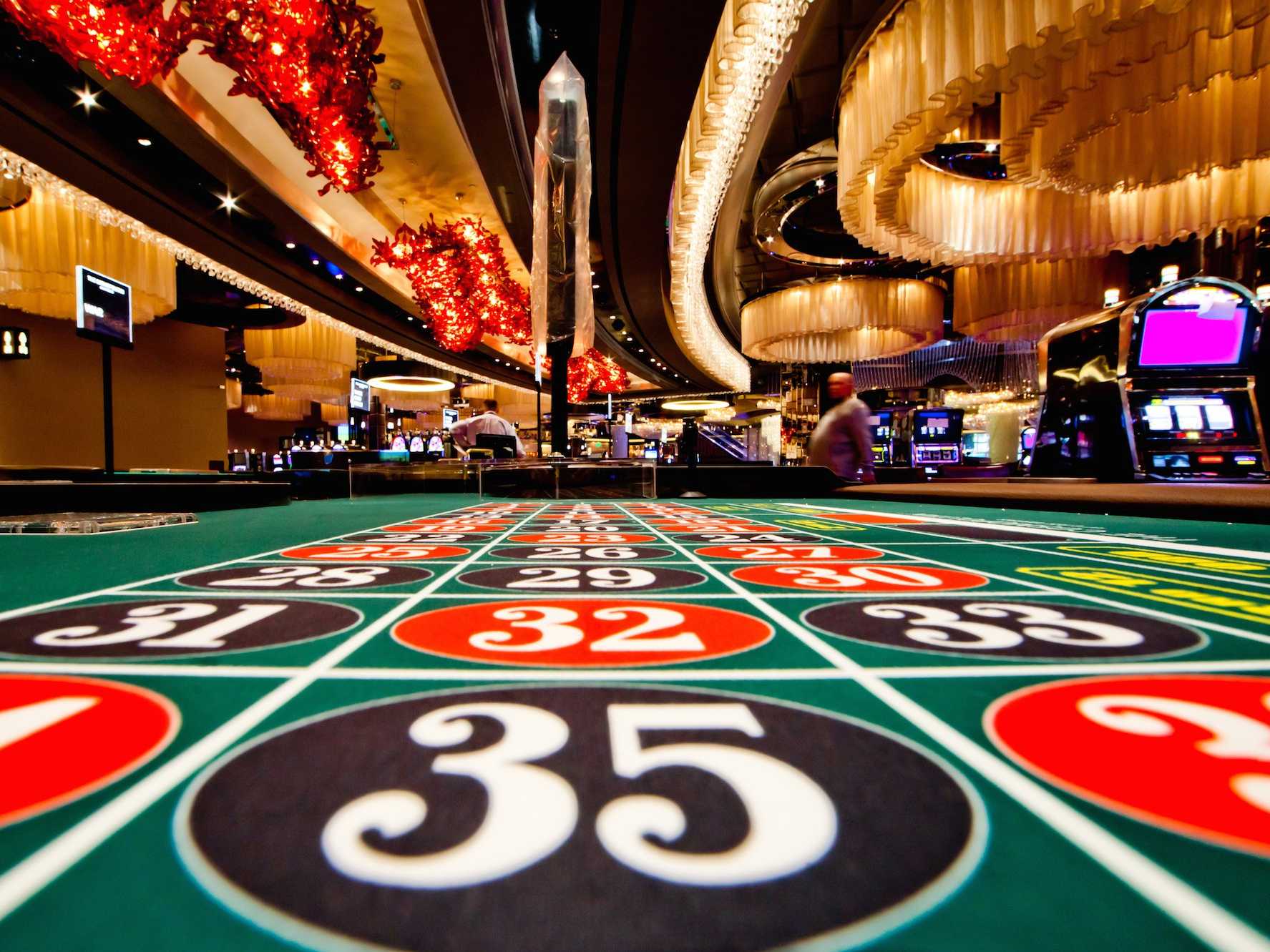
Is the house edge the same in live table games as in traditional virtual table games?
Live dealer games generally feature the same house edge as their virtual counterparts when the rules are identical. A live European roulette wheel with a single zero has the identical 2.70% house advantage as an RNG-based European roulette game. Nevertheless, live casino games at times use minor rule variations. As an illustration, certain live blackjack tables use auto-shufflers or pay 6-to-5 on blackjacks, which increases the house edge. Gamblers should always review the particular rules listed in the live game lobby, as the interactive and engaging format does not change the odds but the rule differences might.